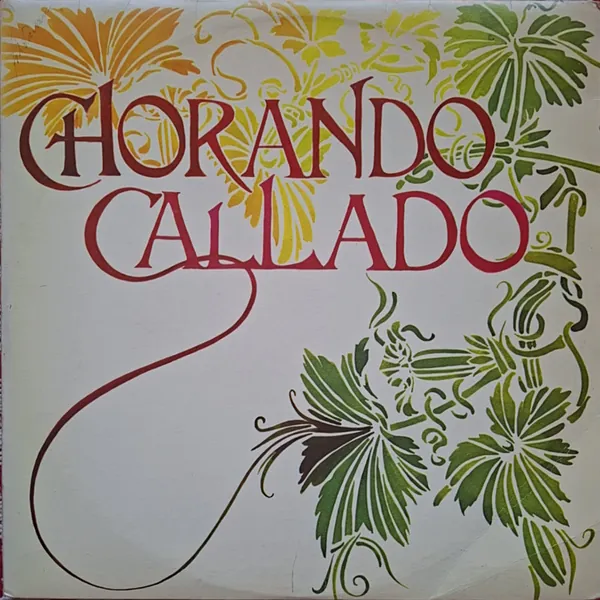
Chorando Callado
1981 · FENAB · FENAB-101 · Brazil
Played on vinyl once on Passolio by Passolio. That was on 22 November 2026. 19 minutes of listening in all.
Tracklist
| A1 | Só Pra Moer
CreditsFlutePatápio Silva Written-ByViriato Figueira Da Silva | |
| A2 | Adiles
CreditsWritten-ByUnknown Artist | |
| A3 | Linguagem Do Coração
CreditsPianoErnesto Nazareth Piccolo Flute [Flautim]Pedro De Alcântara (2) Written-ByJoaquim Antonio Da Silva Callado | |
| A4 | Mercedes
CreditsWritten-ByLuiz Faria | |
| A5 | Sultana
CreditsWritten-ByChiquinha Gonzaga | |
| A6 | Soluçando
CreditsWritten-ByCândido Pereira Da Silva | |
| B1 | Sofres Porque Queres
CreditsWritten-ByBenedito Lacerda Written-ByPixinguinha | |
| B2 | Depoimento De Pixinguinha
CreditsIntervieweePixinguinha | |
| B3 | Carinhoso
CreditsWritten-ByJoão De Barro Written-ByPixinguinha | |
| B4 | Lágrimas De Virgem
CreditsAccompanied ByLuperce Miranda Accompanied ByTute (4) Written-By, Saxophone [Solo]Luiz Americano | |
| B5 | Minha Flauta De Prata
CreditsWritten-ByJayme Florence | |
| B6 | Chorei
CreditsWritten-ByBenedito Lacerda Written-By, Flute [Solo]Pixinguinha | |
| B7 | Chorando Baixinho
CreditsWritten-By, Clarinet [Solo]Abel Ferreira | |
| C1 | Polucena
CreditsAcoustic Guitar [Violão 6 Cordas]Jaime Ernest Dias Acoustic Guitar [Violão 6 Cordas]Valério Xavier De Sousa Acoustic Guitar [Violão 7 Cordas]Alencar (2) CavaquinhoJonas Pereira Da Silva FluteOdette Ernest Dias Written-ByJoaquim Antonio Da Silva Callado | |
| C2 | Água Do Vintém
CreditsAcoustic Guitar [Violão 6 Cordas]Jaime Ernest Dias Acoustic Guitar [Violão 6 Cordas]Valério Xavier De Sousa Acoustic Guitar [Violão 7 Cordas]Alencar (2) CavaquinhoJonas Pereira Da Silva Mandolin [Bandolim]Reco Do Bandolim PandeiroJorginho Written-ByChiquinha Gonzaga | |
| C3 | Ali Babá
CreditsAcoustic Guitar [Violão 6 Cordas]Jaime Ernest Dias Acoustic Guitar [Violão 6 Cordas]Valério Xavier De Sousa Acoustic Guitar [Violão 7 Cordas]Alencar (2) CavaquinhoJonas Pereira Da Silva FluteOdette Ernest Dias Pandeiro, GanzáJorginho Written-ByHenrique Alves De Mesquita | |
| C4 | Macia
CreditsAcoustic Guitar [Violão 6 Cordas]Jaime Ernest Dias Acoustic Guitar [Violão 6 Cordas]Valério Xavier De Sousa Acoustic Guitar [Violão 7 Cordas]Alencar (2) CavaquinhoJonas Pereira Da Silva FluteOdette Ernest Dias Pandeiro, Ganzá, Reco-recoJorginho Written-ByViriato Figueira Da Silva | |
| C5 | Penso Em Ti
CreditsAcoustic Guitar [Violão 6 Cordas]Jaime Ernest Dias Acoustic Guitar [Violão 6 Cordas]Valério Xavier De Sousa Acoustic Guitar [Violão 7 Cordas]Alencar (2) CavaquinhoJonas Pereira Da Silva FluteOdette Ernest Dias GanzáJorginho Written-ByJuca Valle | |
| C6 | Geralda
CreditsArranged ByOsvaldo Pinto Barbosa BomboMarco Aurélio Brito Coutinho ClarinetLuiz Gonzaga Carneiro Finger CymbalsMarcelo Castelo Branco Reis Piccolo Flute [Flautim]Odette Ernest Dias Saxophone [Oficleide]Caetano Alves Pereira SnareJosé Da Silveira Vilar TrombonePaulo Roberto Da Silva TrumpetErasmo Vieira De Araújo TubaDimas José Ribeiro Tuba [Bombardino]Abenaías Xavier Tuba [Bombardão]Carlos Augusto Da Silva Written-ByMiguel Rangel (2) | |
| D1 | É Segredo
CreditsAcoustic Guitar [Violão 6 Cordas]Jaime Ernest Dias Acoustic Guitar [Violão 6 Cordas]Valério Xavier De Sousa Acoustic Guitar [Violão 7 Cordas]Alencar (2) CavaquinhoJonas Pereira Da Silva FluteOdette Ernest Dias Written-ByViriato Figueira Da Silva | |
| D2 | Receiosa
CreditsAcoustic Guitar [Violão 6 Cordas]Jaime Ernest Dias Acoustic Guitar [Violão 6 Cordas]Valério Xavier De Sousa Acoustic Guitar [Violão 7 Cordas]Alencar (2) CavaquinhoJonas Pereira Da Silva FluteOdette Ernest Dias Pandeiro, Reco-recoJorginho Written-ByDuque Estrada Meyer | |
| D3 | Não Insista, Rapariga!
CreditsAcoustic Guitar [Violão 6 Cordas]Jaime Ernest Dias Acoustic Guitar [Violão 6 Cordas]Valério Xavier De Sousa Acoustic Guitar [Violão 7 Cordas]Alencar (2) CavaquinhoJonas Pereira Da Silva ClarinetLuiz Gonzaga Carneiro Pandeiro, GanzáJorginho Written-ByChiquinha Gonzaga | |
| D4 | Bocaiúva
CreditsAcoustic Guitar [Violão 6 Cordas]Jaime Ernest Dias Acoustic Guitar [Violão 6 Cordas]Valério Xavier De Sousa Acoustic Guitar [Violão 7 Cordas]Alencar (2) CavaquinhoJonas Pereira Da Silva FluteOdette Ernest Dias PandeiroJorginho Written-ByJ. P. De Silveira | |
| D5 | Mazurca
CreditsAcoustic Guitar [Violão 6 Cordas]Jaime Ernest Dias Acoustic Guitar [Violão 6 Cordas]Valério Xavier De Sousa Acoustic Guitar [Violão 7 Cordas]Alencar (2) CavaquinhoJonas Pereira Da Silva FluteOdette Ernest Dias PandeiroJorginho Written-ByVideira (2) | |
| D6 | Família Meyer
CreditsArranged ByOsvaldo Pinto Barbosa BomboMarco Aurélio Brito Coutinho ClarinetLuiz Gonzaga Carneiro Finger CymbalsMarcelo Castelo Branco Reis Piccolo Flute [Flautim]Odette Ernest Dias Saxophone [Oficleide]Caetano Alves Pereira SnareJosé Da Silveira Vilar TrombonePaulo Roberto Da Silva TrumpetErasmo Vieira De Araújo TubaDimas José Ribeiro Tuba [Bombardino]Abenaías Xavier Tuba [Bombardão]Carlos Augusto Da Silva Written-ByJoaquim Antonio Da Silva Callado | |
| E1 | Saudades Do Cais Da Glória
CreditsAcoustic Guitar [Violão 6 Cordas]Jaime Ernest Dias Acoustic Guitar [Violão 6 Cordas]Valério Xavier De Sousa Acoustic Guitar [Violão 7 Cordas]Alencar (2) CavaquinhoJonas Pereira Da Silva FluteMaria Elisabeth Ernest Dias Reco-recoJorginho Written-ByJoaquim Antonio Da Silva Callado | |
| E2 | Cuera
CreditsAcoustic Guitar [Violão 6 Cordas]Jaime Ernest Dias Acoustic Guitar [Violão 6 Cordas]Valério Xavier De Sousa Acoustic Guitar [Violão 7 Cordas]Alencar (2) CavaquinhoJonas Pereira Da Silva FluteOdette Ernest Dias PandeiroJorginho Written-ByErnesto Nazareth | |
| E3 | Lídia
CreditsAcoustic Guitar [Violão 6 Cordas]Jaime Ernest Dias Acoustic Guitar [Violão 6 Cordas]Valério Xavier De Sousa Acoustic Guitar [Violão 7 Cordas]Alencar (2) CavaquinhoJonas Pereira Da Silva ClarinetLuiz Gonzaga Carneiro TubaDimas José Ribeiro Written-ByAnacleto De Medeiros | |
| E4 | Paixão Encoberta
CreditsAcoustic Guitar [Violão 6 Cordas]Jaime Ernest Dias Acoustic Guitar [Violão 6 Cordas]Valério Xavier De Sousa Acoustic Guitar [Violão 7 Cordas]Alencar (2) CavaquinhoJonas Pereira Da Silva FluteOdette Ernest Dias Written-ByMário A. Conceição | |
| E5 | Boêmia Terra
CreditsAcoustic Guitar [Violão 6 Cordas]Jaime Ernest Dias Acoustic Guitar [Violão 6 Cordas]Valério Xavier De Sousa Acoustic Guitar [Violão 7 Cordas]Alencar (2) CavaquinhoJonas Pereira Da Silva Pandeiro, Reco-reco, Percussion [Prato e Faca]Jorginho TrombonePaulo Roberto Da Silva Tuba [Bombardino]Abenaías Xavier Written-ByIrineu De Almeida | |
| E6 | Tiririca
CreditsAcoustic Guitar [Violão 6 Cordas]Jaime Ernest Dias Acoustic Guitar [Violão 6 Cordas]Valério Xavier De Sousa Acoustic Guitar [Violão 7 Cordas]Alencar (2) CavaquinhoJonas Pereira Da Silva FluteMaria Elisabeth Ernest Dias Pandeiro, Reco-reco, GanzáJorginho Written-ByAlbertino Inacio Pimentel | |
| F1 | Nenê
CreditsAcoustic Guitar [Violão 6 Cordas]Jaime Ernest Dias Acoustic Guitar [Violão 6 Cordas]Valério Xavier De Sousa Acoustic Guitar [Violão 7 Cordas]Alencar (2) CavaquinhoJonas Pereira Da Silva ClarinetLuiz Gonzaga Carneiro Written-ByFelisberto Marques | |
| F2 | Ondina
CreditsAcoustic Guitar [Violão 6 Cordas]Jaime Ernest Dias Acoustic Guitar [Violão 6 Cordas]Valério Xavier De Sousa Acoustic Guitar [Violão 7 Cordas]Alencar (2) CavaquinhoJonas Pereira Da Silva Mandolin [Bandolim]Reco Do Bandolim Pandeiro, Ganzá, Reco-recoJorginho Written-ByEurico Baptista | |
| F3 | Desmantelando Relógios
CreditsAcoustic Guitar [Violão 6 Cordas]Valério Xavier De Sousa Acoustic Guitar [Violão 7 Cordas]Alencar (2) Acoustic Guitar [Violão Solo]Jaime Ernest Dias CavaquinhoJonas Pereira Da Silva Mandolin [Bandolim]Reco Do Bandolim Pandeiro, GanzáJorginho Written-ByCícero Telles de Menezes | |
| F4 | Abraçando Jacaré
CreditsAcoustic Guitar [Violão 6 Cordas]Jaime Ernest Dias Acoustic Guitar [Violão 6 Cordas]Valério Xavier De Sousa Acoustic Guitar [Violão 7 Cordas]Alencar (2) CavaquinhoJonas Pereira Da Silva FluteOdette Ernest Dias Pandeiro, Percussion [Prato e Faca]Jorginho Written-ByPixinguinha | |
| F5 | Tocando Pra Você
CreditsAcoustic Guitar [Violão 6 Cordas]Jaime Ernest Dias Acoustic Guitar [Violão 6 Cordas]Valério Xavier De Sousa Acoustic Guitar [Violão 7 Cordas]Alencar (2) CavaquinhoJonas Pereira Da Silva ClarinetLuiz Gonzaga Carneiro Pandeiro, GanzáJorginho Written-ByLuiz Americano | |
| F6 | Dolente
CreditsAcoustic Guitar [Violão 6 Cordas]Jaime Ernest Dias Acoustic Guitar [Violão 7 Cordas]Alencar (2) Acoustic Guitar [Violão 7 Cordas]Valério Xavier De Sousa CavaquinhoJonas Pereira Da Silva Mandolin [Bandolim]Reco Do Bandolim Pandeiro, Caxixi [Xique-xique]Jorginho Written-ByJacob Bittencourt |
Release Credits
Companies
Discogs notes
Data provided by Discogs.
About this record
 Biography: Patápio Silva
No biography in this language. Show the Portuguese Wikipedia article
![]() Biography: Grupo Do Cavaquinho De Ouro
No biography available for this artist.
 Biography: Pedro De Alcântara (2)
No biography available for this artist.
 Biography: Ernesto Nazareth

Ernesto Júlio de Nazareth (March 20, 1863 – February 1, 1934) was a Brazilian composer and pianist, especially noted for his creative maxixe and choro compositions. Influenced by a diverse set of dance rhythms including the polka, the habanera and the lundu, he combined these elements with his classical training to create compositions that he called “Brazilian tangos". These would be the precursors for what is known today as Choro. His piano repertoire is now part of the teaching programs of both classical and popular styles, as Nazareth once served at the boundary between these two worlds.
Biography
Nazareth was born in Rio de Janeiro, one of five children. His mother, Carolina da Cunha, gave him his first piano lessons. At the age of ten, after his mother's death, he continued his piano studies with Eduardo Madeira and Charles Lucien Lambert.
Strongly influenced by Chopin, Nazareth published his first composition Você Bem Sabe (which means "You know it well") in 1877, at age 14. At that time, he had begun his professional career playing in cafes, balls, society parties and in the waiting rooms of theaters. In 1893, Casa Vieira Machado published his famous tango Brejeiro.
In 1879, he wrote his first tango, Cruz perigo. In 1880, at age 17, he made his first public appearance at the Mozart Club. The following year, he composed the tango Não caio n'outra, his first great success, with several reprints. In 1885, he performed in concerts in different clubs of the court. In 1893, Casa Vieira Machado launched a new catalogue of his compositions, including the tango Brejeiro, which achieved national and even international success; the Republican Guard band of Paris included it in their repertoire and recorded it.
His first concert as a pianist took place in 1898. The following year he prepared the first edition of the tango Turuna. In 1905, he had his first work, Brejeiro, recorded by singer Mario Pinheiro with the title O sertanejo enamorado with lyrics by Catulo da Paixão Cearense. Meanwhile, the "Casa Édison" marching band recorded his tango Brushed, which became quite successful. In 1907 Nazareth was appointed third book-keeper of the National Treasury, a position that he did not occupy for not mastering the English language. In 1908, he began working as a pianist at the Mozart Club.
The following year, he participated in a concert held at the National Institute of Music, playing his gavotte Corbeille de fleurs and tango Batuque. He began giving private piano lessons, and worked as a pianist for Casa Gomes in 1921, and the Odeon Cinema from 1920 until 1924. In São Paulo and Campinas he performed several shows in the Municipal Theater and the Conservatory. He was given a grand piano as a gift from his admirers. He was one of the first artists to play for the Society Radio of Rio de Janeiro. In 1932 he presented, for the first time, a recital in which he performed only his compositions.
In 1933, after a period of mental instability following the deaths of his wife and daughter, and diagnosed with syphilis and worsening hearing problems caused by a fall during childhood, Nazareth was hospitalized at the Juliano Moreira Asylum in Jacarepaguá. He fled the asylum February 1, 1934 and was found dead three days later in the adjacent forest near a waterfall, where he had drowned.
Catalog of works
Nazareth was noted for creatively combining diverse influences into his music, not only of Brazilian music but also from the music of Europe, Africa and ragtime. Many of his compositions remain part of the repertory today. He composed 88 tangos, 41 waltzes, 28 polkas and numerous sambas, galops, quadrilles, Schottisches, fox-trots, romances and other types of scores, totaling 211 complete compositions.
Media
'Escovado' is a common slang which means 'smart'. Ary Vasconcelos tells us in his book Panorama da Musica Popular Brasileira that Nazareth was a "devoted family man who often gave the songs he composed titles in honor of his son, sometimes his wife, or another relative". Travesso was dedicated to his son Ernesto, Marieta and Eulina to his two daughters, Dora to his wife Theodora, Brejeiro to his nephew Gilbert, etc.
Escovado was first published by Casa Vieira Machado & Co. and dedicated to Fernando Nazareth, the composer's younger brother. It became one of Nazareth's greatest success, having the main theme been later tapped by the French composer Darius Milhaud in his Le bœuf sur le toit (1919). In September 1930, accepting an invitation made by Eduardo Souto, then artistic director of Odeon-Parlophone, Nazareth recorded this piece.
Brejeiro is one of the ambient songs in the game Civilization VI, when playing with Brazil. The version used in the game was composed and directed by Geoff Knorr.
Source: Wikipedia ↗ · CC BY-SA
![]() Biography: Quarteto Luiz De Souza
No biography available for this artist.
![]() Biography: Grupo Chiquinha Gonzaga
No biography available for this artist.
![]() Biography: Grupo "O Passos No Choro"
No biography available for this artist.
![]() Biography: Conjunto Regional De Pixinguinha
No biography available for this artist.
 Biography: Pixinguinha

Alfredo da Rocha Viana Filho (May 4, 1897 – February 17, 1973), better known as Pixinguinha, (Portuguese: [piʃĩˈɡiɲɐ]) was a Brazilian composer, arranger, flutist, and saxophonist born in Rio de Janeiro. He worked with Brazilian popular music and developed the choro, a genre of Brazilian music that blends Afro-Brazilian rhythms with European influences. Some of his compositions include "Carinhoso", "Glória", "Lamento", and "Um a Zero".
Pixinguinha merged the traditional music of 19th-century composers with modern jazz-inspired harmonies, sophisticated arrangements, and Afro-Brazilian rhythms. This is attributed as having helped establish choro as an aspect of Brazilian culture.
Pixinguinha was among the first Brazilian musicians to embrace radio broadcasting and studio recording, technologies that played a key role in bringing his music to a broader audience.
Early life and career
Pixinguinha was born to musician Alfredo da Rocha Viana, a flutist with an extensive collection of choro music scores and regularly hosted musical gatherings in his house. In 1912, Pixinguinha began performing in cabarets and theatrical revues in Rio de Janeiro’s Lapa district. He later became a flutist for the house orchestra at the Cine Rio Branco movie theater, where live music accompanied silent films. In 1914, Pixinguinha and his friends João Pernambuco and Donga formed a band called Caxangá, which gathered attention until it disbanded in 1919.
The Eight Batons
In 1919, Pixinguinha, along with his brother and other musicians formed the musical group called Os Oito Batutas (lit. 'The Eight Amazing Players'). The instrumental lineup was initially traditional, dominated by a rhythm section of string instruments: Pixinguinha's flute, guitars, cavaquinho, banjo cavaquinho, and hand percussion. Performing in the lobby of the Cine Palais movie theater, the band's music soon became more popular than the films themselves. Their repertoire was diverse, encompassing folk music from northeast Brazil, sambas, maxixes, waltzes, polkas, and "Brazilian tangos" (the term choro was not yet established as a genre). The band appealed to the nationalistic desires of upper-class Brazilians, who were in support of what was considered to be uniquely Brazilian traditional music, free from foreign influences. Os Oito Batutas became a sensation across Brazil, despite facing disapproval from the white Rio elite against black men performing in popular venues.
Os Oito Batutas and Pixinguinha's music provoked controversy about race and the influence of Europe and the United States on Brazilian music. The band had white and black musicians and performed mainly in upper-class venues where black artists had previously been prohibited. Moreover, they were criticized by people who believed that Brazilian musical culture should primarily reflect its European roots and by those repelled by their music's diversity. Some critics claimed that Pixinguinha's compositional style and instrumental incorporation of trumpets and saxophones were negatively influenced by American jazz.
After performing a gig for Duque and Gabi, a dance duo, at the Assírio cabaret, Os Oito Batutas were discovered by Arnaldo Guinle, who sponsored their first European tour in 1921. In Paris, they served as ambassadors for Brazilian music, performing for six months at the Schéhérazade cabaret. Their tour was a success and Pixinguinha received praise from many Parisian musical artists, including Harold de Bozzi. Upon returning to Brazil, they toured in Buenos Aires, where they made recordings for RCA Victor.
Pixinguinha returned from Paris with a broadened musical perspective. He began to incorporate jazz standards and ragtime music into his band's repertoire, changing the lineup dramatically by adding saxophones, trumpets, trombones, piano, and a drum kit. The name of the musical group was changed to simply Os Batutas to reflect the new sound.
Orquestra Victor Brasileira
In the late 1920s, Pixinguinha was hired by RCA Victor label (currently known as RCA Records) to lead the Orquestra Victor Brasileira (Brazilian Victor Orchestra). Working there refined his skills as an arranger. At the time, it was common for Choro musicians to improvise their parts based on a simple piano score. However, the growing demand for radio music played by large ensembles required sheets to be written for every instrument, which was something Pixinguinha could make happen. During his arranging career, he created some of his most famous compositions, which were popularized by singers of that time such as Francisco Alves and Mário Reis.
Lacerda's conjunto regional
In 1939 he was succeeded by composer Radamés Gnattali. Pixinguinha left Orquestra Victor Brasileira to join flautist Benedito Lacerda's band, where he played the tenor saxophone as his primary instrument and continued to compose music.
Lacerda's band was a conjunto regional (or just regional, meaning "regional band"), the name given to in-house bands hired by radio stations to perform music and accompany singers, often live in front of a studio audience. Throughout the 30s and 40s regionals provided steady employment to choro musicians of that time and led to the professionalization of the Brazilian music industry. With Lacerda, Pixinguinha started another period of composing and recording music. Due to economic issues and the fact that the regionals fell out of favor during the late 40s, Pixinguinha had to sell the rights to his compositions to Benedito Lacerda. For this reason, Benedito Lacerda is credited as the co-composer on many of Pixinguinha's tunes, even those composed while Lacerda was a young boy. Pixinguinha played supporting parts on the saxophone for the recordings with Lacerda. Lacerda plays the flute parts written and meant to be played by Pixinguinha.
Retirement and death
By the mid-1950s, the change of musical preferences of the audience and the emerging popularity of samba, bolero and bossa nova in Brazil led to the decline of choro, as the other genres dominated the radio. Pixinguinha spent his last years in retirement, appearing in public only on rare occasions (such as the "Evening of Choro" TV programs produced by Jacob do Bandolim in 1955 and 1956).
Pixinguinha died on February 17, 1973, in the Church of Nossa Senhora da Paz in Ipanema while attending a baptism. He was buried in the cemetery of Inhaúma. April 23rd which was believed to be his birthday, is now celebrated as the National Day of Choro in Brazil. This was officially established in 2000 after a campaign by bandolim player Hamilton de Holanda and his students at the Raphael Rabello School of Choro. In November 2016, however, it was discovered that Pixinguinha's actual date of birth was May 4, not April 23. Despite this fact, Brazil's National Day of Choro remains on April 23rd.
In 2013, his 117th birthday was honored with a Google Doodle.
A bronze statue of Pixinguinha was unveiled in 1996. It stands near the now-defunct Gouveia bar, where he often performed.
Pixinguinha is depicted in the 2021 biographical film Pixinguinha, Um Homem Carinhoso. He was portrayed by Brazilian actor Seu Jorge.
Musical contributions
Pixinguinha's compositions are critically acclaimed for their sophisticated use of harmony, rhythm, and counterpoint. Although many of his early compositions were intended to be played on the piano, Pixinguinha's later works take full advantage of the larger musical groups (regionais) that he worked with, incorporating intricate melodic lines, brass instrumentation, contrapuntal bass lines, and syncopated rhythms. Pixinguinha was one of the first band leaders to regularly include several Afro-Brazilian percussion instruments, such as the pandeiro and afoxé, that have now become standard in choro and samba music.
His arrangements were likely influenced by the sounds of ragtime and the American jazz bands that became popular early in his career. When he released "Lamentos" in 1928 and "Carinhoso" in 1930, Pixinguinha was criticized for incorporating too many jazz elements into his compositions. These pieces have since become respected parts of the choro canon.
Source: Wikipedia ↗ · CC BY-SA
![]() Biography: Orquestra Típica Pixinguinha-Donga
No biography available for this artist.
![]() Biography: Luiz Americano
Luiz Americano (27 February 1900 – 29 March 1960) was a Brazilian choro musician and composer. He was best known as a clarinetist, saxophonist and recording artiste.
Early life
Luiz Americano (also known as Luís Americano, Luiz Americano Rego and Luiz Americano do Rego) was born on 27 February 1900 in Aracaju where his father, Jorge Americano, was a bandmaster. He began studying music with his father when he was 13. In 1918, he joined a military band in the army in Aracaju. He was transferred to Maceió and then Rio de Janeiro.
Musical career
After leaving the army in 1922, he joined several orchestras to perform, compose and record popular music, especially in the choro genre, as well as popularising the saxophone. He worked with Justo Nieto, Raul Lipoff, Simon Bountman and Romeu Silva. His first recording was in 1927, playing saxophone in his own compositions of a waltz Leda and choro Sentimento. He spent a short time in Argentina from 1928 until 1930. This included being a member of Adolfo Carabelli's orchestra as well as Gordon Stretton's touring group for three months in 1928. The peak of his career was in the 1930s and 1940s being successful as both composer and soloist especially in the choro genre. His choro compositions from 1932 onwards, such as É do Que há established his reputation. He was in demand as a session saxophonist and clarinetist as well as being a member of longer-lasting groups. He is featured in recordings on the Odeon and several other labels. In 1932 he joined Pixinguinha and Donga in the Velha Guarda group. He also performed with Bonfiglio de Oliveira. In 1937 he joined the Trio Carioca with pianist Radamés Gnattali and Luciano Perrone on drums. In 1940, he was among those selected by Pixinguinha to contribute to a Leopold Stokowski's recording to depict Latin America. He also recorded with several singers of the time, including Carmen Miranda and Nélson Gonçalves. He was a studio musician for Rádio Mayrink Veiga (1930-1950) and Rádio Nacional (1950-1960).
He continued to perform and record throughout his life. In the 1940s he recorded on the RCA Victor label and on the Todamérica label in 1953. He released his final album, Por que choras, saxofone? (Why do you cry, saxophone?) in the final six months of his life when he was unwell. He died in the Brás de Pina district of Rio de Janeiro, 29 March 1960.
His compositions continue to be released in new formats as well as recorded by others. The album Luiz Americano - Saxofone, why do you cry? was released on CD in 2001 by Intercdrecords where artistes including Érica Rego and the Orlando Brothers performed his compositions.
Published songs and recordings
Americano's most famous works are the choros É do que há and Numa Seresta and the waltz Lágrimas de virgem.
- His published compositions and songs include:
- Antigamente era assim (It used to be like this)
- Ao luar (In the moonlight)
- Assim mesmo (Like that)
- Atraente (Attractive) (with J. Mesquita)
- Chorinho do Pacaembu (with Ubirajara dos Santos)
- Dancing avenida (Dancing avenue)
- É do que há (It's what it is)
- Estes são outros quinhentos (These are other five hundred)
- Eu te quero bem (I love you I want it well)
- Intrigas do boteco do Padilha (Intrigues from the Padilha's bar)
- Sorriso de Cristal (crystal smile) (with E. Rego)
Recordings
- Americano's recordings include:
- Leda/Sentimento (1927) Odeon 78
- Calamitoso/Muito me cantas (1927) Odeon
- Na maciota/Desordeiro (1927) Odeon
- Saxofone (1928) Odeon
- Linda Erika (1929) Odeon
- Dindinha/Lisses (1929) Odeon
- É do que há/Lágrimas de virgem (1931) Odeon
- Numa seresta/Soluços (1931) RCA Victor
- Eu te quero bem/Melodia de um olhar (1932) Odeon
- Ao luar/Assim mesmo (1932) Odeon
Source: Wikipedia ↗ · CC BY-SA
 Biography: Benedito Lacerda
Benedicto Lacerda (14 March 1903 – 16 February 1958) was a Brazilian composer, flutist, and maestro. A long-time player of música popular brasileira, he is most well known for his collaborations with famous saxophonist Pixinguinha.
Biography
Lacerda was born in 1903 in the city of Macaé, the child of washerwoman Dona Lousada. He later moved with his mother to the city of Rio de Janeiro, more specifically to the Estácio neighborhood. He attended performances of the Sociedade Musical Nova Aurora orchestra since his childhood. Agile in his thinking, he grew up in an environment of many choro singers and samba players, growing up alongside famed samba musicians of the time such as Bide, Noel Rosa and Ismael Silva.
Later on, Lacerda came to serve in the military and went on to play in a band in the regiment and played the bumbo, in a time where the genre was still relatively obscure. During this time period, he studied music and soon began to play the flute in the band. He became one of the regiment's flutists, becoming accomplished and rising up the ranks. He went on to play the flute in the regiment's rendition of the Antônio Carlos Gomes opera O Guarany. Lacerda served in the military for 5 years, after which he requested a discharge and began playing music full time. In 1928, he played in the regional group Boêmios da Cidade, accompanying Josephine Baker and playing in theatres, orchestral theatres, dance parties and cabarets. He also played saxophone in some jazz orchestras.
At the end of the 1920s and the beginning of the 1930s, he organized a group with Brazilian musicians, giving it the name Gente do Morro. The group was characterized for its percussions and flute solos. The group did not last for long, but traveled and performed with Noel Rosa. As Gente do Morro did not work out, Lacerda called Horondino (Dino 7 Cordas), who was a member of the group, and Canhoto do Cavaco, and the three began to regiment music to work with them. The group would later become Conjunto Regional Benedito Lacerda. They were later joined by Pixinguinha. With this group, they accompanied names such as Carmen Miranda, Luiz Barbosa, Mário Reis, Francisco Alves, and Sílvio Caldas, along with him successfully working as a composer.
In the 1940s, he played at casinos with compiled Brazilian music and created a series of anthological recordings in partnership with Pixinguinha, bringing with him an extensive repertoire of choro music. As a result of their work, they made about 40 recordings, musical editions, and albums with their sheet music. They partnered extensively and produced hits such as "Sofres porque queres", "Naquele tempo" and "Um a zero" (the latter being made long before as a celebration of a goal made by footballer Friedenreich at the 1919 South American Championship). Due to economic troubles as the regionais fell out of favor in the late 40s, Pixinguinha had to sell the rights to his compositions to Benedito Lacerda, who for this appears a co-composer of many of Pixinguinha's tunes, even those composed while Lacerda was a boy. In the recordings with Lacerda, Pixinguinha plays secondary parts on the saxophone while Lacerda plays the flute part on tunes that Pixinguinha originally wrote on that instrument.
Lacerda was an award-winning composer for Rio carnaval. He was a founder of the União Brasileira de Compositores and director of the Brazilian Society of Authors, Composers, and Writers of Music. He died in Rio de Janeiro in 1958, a victim of lung cancer.
The official name of Macaé Airport had been previously named after Lacerda, but was changed in 2022 to Joaquim de Azevedo Mancebo Airport, after the founder of the local air club.
Main successes
- A jardineira, with Humberto Porto - Orlando Silva (1939)
- A Lapa, with Herivelto Martins - Francisco Alves (1949)
- Acerta o passo, with Pixinguinha (1949)
- Acorda, escola de samba!, with Herivelto Martins - Sílvio Caldas (1937)
- Acho-te uma graça, with Carvalhinho and Haroldo Lobo - César de Alencar & Heleninha Costa (1952)
- Ainda me recordo, with Pixinguinha (1947)
- Aliança partida, with Roberto Martins - Orlando Silva (1937)
- Amigo infiel, with Aldo Cabral - Orlando Silva (1938)
- Amigo leal, with Aldo Cabral - Orlando Silva (1937)
- Boneca, with Aldo Cabral - Sílvio Caldas (1935)
- Brasil, with Aldo Cabral - Francisco Alves & Dalva de Oliveira (1939)
- Carnaval da minha vida, with Aldo Cabral - Francisco Alves (1942)
- Cheguei, with Pixinguinha (1946)
- Chorei, with Pixinguinha (1942)
- Coitado do Edgar!, with Haroldo Lobo - Linda Batista (1945)
- Despedida de Mangueira, with Aldo Cabral - Francisco Alves (1939)
- Devagar e sempre, with Pixinguinha (1949)
- Dinorá, with José Ferreira Ramos (1935)
- Duvi-d-o-dó, with João Barcellos - Carmen Miranda (1936)
- E o vento levou, with Herivelto Martins - Bando da Lua (1940)
- Ele e eu, with Pixinguinha (1946)
- Espanhola, with Haroldo Lobo - Aracy de Almeida (1946)
- Espelho do destino, with Aldo Cabral - Orlando Silva (1939)
- Eva querida, with Luiz Vassalo - Mário Reis (1935)
- Falta um zero no meu ordenado, with Ary Barroso - Francisco Alves (1948)
- Fica doido varrido, with Eratóstenes Frazão - Sílvio Caldas (1945)
- Ingênuo, with Pixinguinha (1946)
- Lero-lero, with Eratóstenes Frazão - Orlando Silva (1941)
- Naquele tempo, with Pixinguinha (1946)
- Normalista, with David Nasser - Nelson Gonçalves (1949)
- Número um, with Mário Lago - Orlando Silva (1939)
- O gato e o canário, with Pixinguinha (1949)
- Os oito batutas, with Pixinguinha (1947)
- Pedro, Antônio e João, with Oswaldo Santiago - Dalva de Oliveira (1940)
- Pombo-correio, with Darcy de Oliveira - Gilberto Alves(1942)
- Proezas de Solon, with Pixinguinha (1946)
- Professora, with Jorge Faraj - Sílvio Caldas (1938)
- Querido Adão, with Oswaldo Santiago - Carmen Miranda (1936)
- Sabiá de Mangueira, with Eratóstenes Frazão - Nelson Gonçalves (1944)
- Segura ele, with Pixinguinha (1946)
- Seresteiro, with Pixinguinha (1946)
- Seu Lourenço no vinho, with Pixinguinha (1948)
- Sofres porque queres, with Pixinguinha (1946)
- Soluços, with Pixinguinha (1949)
- Um a zero, with Pixinguinha (1946)
- Um caboclo abandonado (Rolinha triste), with Herivelto Martins - Sílvio Caldas (1936)
- Urubatã, with Pixinguinha (1946)
- Verão no Havaí, with Haroldo Lobo - Francisco Alves (1944)
- Voltei pro morro, with Darcy de Oliveira - Ademilde Fonseca (1942)
- Vou vivendo, with Pixinguinha (1946)
Source: Wikipedia ↗ · CC BY-SA
Elsewhere
Discogs ↗ AllMusic ↗ Rate Your Music ↗ MusicBrainz ↗
Recent plays
- 22 Nov 2026 · Side 1 · Passolio